Navigating Greece’s Record-High Construction Costs

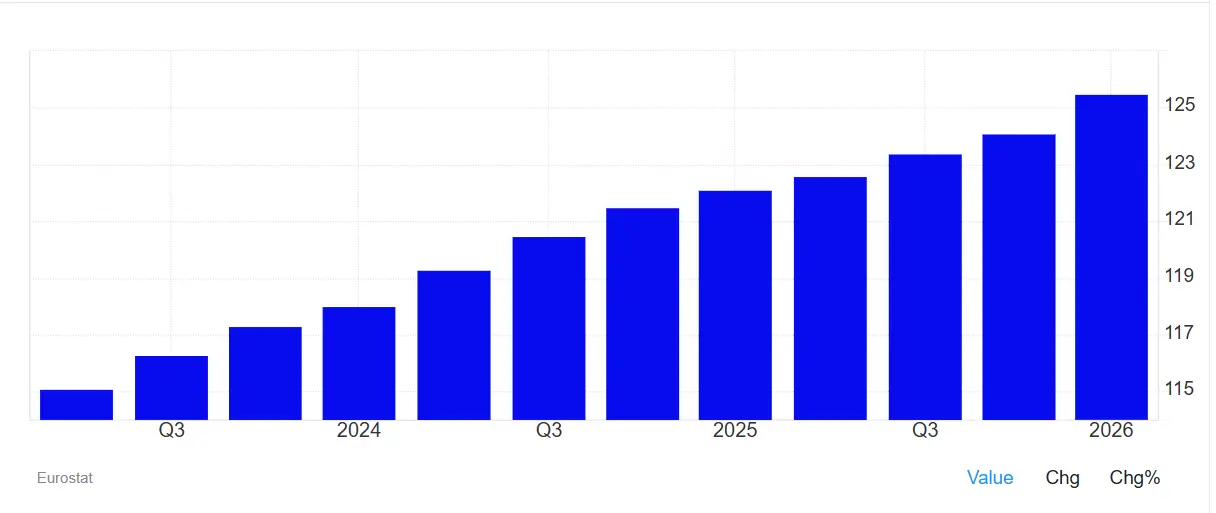
For anyone eyeing real estate or development in Greece, the dream of a sun-drenched villa often collides with a stark macroeconomic reality. According to recent data from EUROSTAT, Greece’s Construction Cost Index has climbed to an all-time record high of 125.50 points in early 2026. To put this in perspective, when Eurostat began tracking this index in March of 2000, it sat at a baseline low of 76.10 points. We are currently witnessing the most expensive building climate in modern Greek history.

For the Ionian Islands—including hotspots like Corfu, Paxos, Lefkada, Kefalonia, and Zakynthos—this index acts as a baseline, but local geographic bottlenecks push actual on-the-ground expenses significantly higher.

The Macro View: Greece's Construction Cost Trajectory

Navigating Greece’s Record-High Construction Costs - Sun Ionian Architects

The structural climb in Greek building costs isn’t an overnight phenomenon, but rather a compounding wave driven by global material volatility, energy transitions, and a massive post-pandemic surge in foreign direct investment (FDI). While mainland infrastructure projects can somewhat absorb these costs through economy of scale, residential and luxury boutique developments face tighter margins.

As shown in the chart fropm EUROSTAT, construction costs in Greece have experienced a steady and uninterrupted upward trajectory from late 2023 through the first half of 2026. Sourced from Eurostat, the data highlights persistent inflationary pressures within the sector, with the cost index climbing consistently every single quarter.

The index begins just above the 115 mark in 2023, surges past 119 by mid-2024, and comfortably clears the 121 and 123 thresholds throughout 2025. By the first half of 2026, costs reach their peak on the chart, soaring past the 125 mark. This relentless quarterly growth indicates that the macroeconomic factors driving up construction costs in Greece—such as material supply chain pressures, labor shortages, or energy costs—have remained highly active without experiencing any significant correction or leveling off over the last three years.


According to Eurostat data visualized in greece-high-construction-cost.webp, construction costs in Greece have undergone a relentless quarterly surge from late 2023 through the first half of 2026. This steady upward trajectory saw the index climb from just above 115 points to peak past the 125 mark in 2026, signaling persistent, uncorrected inflationary pressures across the Greek construction sector over a three-year period

a
a
a

using the weather in creative photo process

Lorem ipsum dolor sit amet, consectetur adipiscing elit, sed do eiusmod tempor incididunt ut labore et dolore magna aliqua. Neque gravida in fermentum et. Pharetra diam sit amet nisl suscipit. Semper feugiat nibh sed pulvinar proin gravida hendrerit. Luctus accumsan tortor posuere ac ut consequat semper viverra nam. Dignissim convallis aenean et tortor at risus. Natoque penatibus et magnis dis parturient montes nascetur ridiculus mus. Ultricies integer quis auctor elit sed vulputate id volutpat lacus laoreet non duis tristique sollicitudin nibh sit amet commodo nulla.

Sit amet massa vitae tortor condimentum lacinia quis vel. Enim ut sem viverra aliquet eget sit amet tellus. Vulputate odio ut enim blandit. Lectus vestibulum mattis ullamcorper velit sed. Consectetur adipiscing elit pellentesque habitant morbi tristique. Sagittis nisl rhoncus mattis rhoncus urna. Lacinia quis vel eros donec ac odio. Diam quam nulla porttitor massa id. Ut aliquam purus sit amet luctus. Nibh tellus molestie nunc non blandit massa enim nec. Nulla malesuada pellentesque elit eget gravida. Elit duis tristique sollicitudin nibh sit amet commodo nulla. Aenean pharetra magna ac placerat vestibulum lectus mauris. 

The Ionian Premium: Why Islands Cost More.

When Eurostat publishes a national index of 125.50, that number represents a blended average. In the Ionian Sea, developers have to factor in what locals call the Island Premium.” Building on an island automatically introduces cost layers that do not exist on the mainland:

The Logistics Multiplier: Almost all heavy raw materials—ready-mix concrete, structural steel, rebar, and specialized insulation—must be trucked to ports (like Igoumenitsa or Patras) and ferried across. Ferry freight fees and weather delays directly inflate material line items by 15% to 30%.

Labor Deficits: The Ionian Islands have experienced a severe shortage of skilled construction labor. Local crews are often booked out for seasons, requiring developers to fly or ferry in specialized crews from Athens or Thessaloniki, covering their accommodation and per diems.

Geological & Seismic Compliance: The Ionian region is seismically active. Greek anti-seismic building codes are already among the strictest in Europe, demanding high volumes of structural steel and high-grade concrete. Combining record-high material indices with heavy structural requirements amplifies the baseline budget.

Ut lectus arcu bibendum at varius. Ullamcorper dignissim cras tincidunt lobortis feugiat vivamus at augue. Dolor morbi non arcu risus quis varius quam quisque. Maecenas ultricies mi eget mauris pharetra et. Lobortis scelerisque fermentum dui faucibus in ornare quam viverra orci. Scelerisque mauris pellentesque pulvinar.